



• About us
  • Advertise with us
  • Subscribe Now
  • Media Kit
Saturday, January 10, 2026
Gulf Agriculture
  • Home
  • News
  • Videos
  • Industry Update
    • Animal Feeds & Nutrition
    • Greenhouses
    • Garden & Landscape
    • Fruits & Vegetables
    • Aquaculture
    • Agricultural Machineries & Equipment
    • Horticulture & Floriculture
    • Fertilizers & Agrochemicals
    • Irrigation
    • Plant Protection & Nutrition
    • Poultry & Livestock
    • Seeds & Nursery
    • Smart Farming
  • Country Update
  • Digital Magazines
    • Publications
  • Events
  • Careers
  • Contact Us
  • Media Kit
No Result
View All Result
  • Home
  • News
  • Videos
  • Industry Update
    • Animal Feeds & Nutrition
    • Greenhouses
    • Garden & Landscape
    • Fruits & Vegetables
    • Aquaculture
    • Agricultural Machineries & Equipment
    • Horticulture & Floriculture
    • Fertilizers & Agrochemicals
    • Irrigation
    • Plant Protection & Nutrition
    • Poultry & Livestock
    • Seeds & Nursery
    • Smart Farming
  • Country Update
  • Digital Magazines
    • Publications
  • Events
  • Careers
  • Contact Us
  • Media Kit
No Result
View All Result
Gulf Agriculture
No Result
View All Result
Home News

Monitoring Moisture Content in Feed for Optimal Animal Health

by Gulf Agriculture News Desk
18 hours ago
in News
Monitoring Moisture Content in Feed for Optimal Animal Health
ShareShareShareShareShare

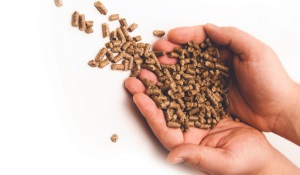
Moisture control can make or break feed quality. Too much moisture invites molds and bacteria that destroy both safety and value. Too little creates brittle, dusty pellets that animals won’t eat—tanking performance. For mill operators and nutritionists, moisture monitoring isn’t optional. It’s the difference between consistent, high-performing feed and costly failures.

The Science Behind Feed Moisture

Feed moisture represents the proportion of water contained within a feed sample and directly influences physical quality, nutrient stability, and microbial safety. For most species, the optimal range lies between 11–13%, although this can vary depending on diet formulation, processing conditions, and environmental factors. Feed that exceeds this range supports microbial growth and nutrient degradation, while overly dry feed tends to fracture during handling, generating fines that reduce pellet quality and feed intake.

According to the U.S. Department of Agriculture, molds begin to proliferate when available water—measured as water activity (aₙ)—exceeds 0.70, even if total moisture levels appear safe (USDA, 2023). This means that both total moisture and water activity must be carefully controlled to maintain feed quality and minimize spoilage risk.

Why It Matters for Animal Health

Feed with excess moisture provides ideal conditions for fungi such as Aspergillus and Penicillium, known to produce mycotoxins that impair immune function, reduce feed efficiency, and negatively affect growth. Research compiled by Anitox shows that moisture imbalance also disrupts feed form and nutrient delivery. Overly moist pellets can fracture during cooling and transport, while overly dry pellets generate dust that animals may avoid eating, leading to variable nutrient intake and inconsistent flock or herd performance.

Maintaining uniform moisture across batches safeguards both microbial safety and the uniform nutritional value needed for predictable animal growth.

Best Practices in Moisture Monitoring

Effective moisture management begins with representative sampling at key stages of production—after mixing, conditioning, and cooling. Near-infrared (NIR) spectroscopy enables rapid, on-site measurement of moisture and nutrient levels, while laboratory oven-drying remains the calibration standard for accuracy.

Environmental monitoring is equally important. Condensation inside silos or packaging can cause “moisture migration,” where temperature differences drive vapor toward cooler feed surfaces, resulting in localized mold growth and spoilage. 

Integrated Moisture Control

Managing moisture effectively requires balancing steam conditioning, cooling, and storage conditions to stabilize water content throughout the feed. Attention to equipment calibration, process timing, and regular microbial testing helps minimize both nutrient loss and contamination. For feeds stored long term, maintaining optimal ambient humidity and airflow can prevent rehydration and preserve shelf life.

Monitoring moisture content in feed is fundamental to ensuring feed safety, nutritional stability, and animal performance. By implementing consistent testing protocols and controlling environmental variables, feed manufacturers can reduce spoilage, improve pellet integrity, and promote uniform growth and health across production systems. Precision in moisture control is not simply a process metric—it is a vital safeguard for both product quality and animal well-being.

Producers ready to support feed pellet quality with effective moisture management should contact their clean feed expert today.
Post Views: 114
ADVERTISEMENT
Previous Post

From Galicia (Spain), your strategic partner in canned fish and seafood

Related Posts

BRANDT BUILDS INTERNATIONAL TEAM, ADDS COMMERCIAL DIRECTOR, AGRONOMY DIRECTOR AND BUSINESS PERFORMANCE MANAGER
News

BRANDT BUILDS INTERNATIONAL TEAM, ADDS COMMERCIAL DIRECTOR, AGRONOMY DIRECTOR AND BUSINESS PERFORMANCE MANAGER

January 8, 2026
Poultry Asia is Returning in 2026 at World Trade Centre Kuala Lumpur, Malaysia!
Events News

Poultry Asia is Returning in 2026 at World Trade Centre Kuala Lumpur, Malaysia!

January 8, 2026
ICSCE 2026 to Bring Global Agri-Inputs Leaders Together in Dubai
Events News

ICSCE 2026 to Bring Global Agri-Inputs Leaders Together in Dubai

January 6, 2026
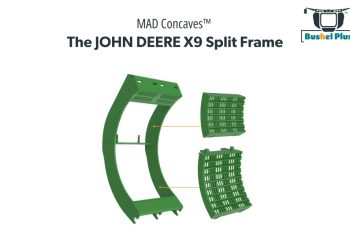
Bushel Plus Launches X9 Split Frame MAD Concaves™ for John Deere X9 Series Combines
News

Bushel Plus Launches X9 Split Frame MAD Concaves™ for John Deere X9 Series Combines

January 6, 2026
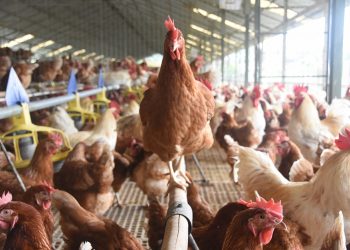
Animal Welfare Regulation Issued, Opening Wider Opportunities for Cage-Free Egg Development
News

Animal Welfare Regulation Issued, Opening Wider Opportunities for Cage-Free Egg Development

January 5, 2026
New Study Reveals How Key Pre-emergence Herbicides Differ in Action Against Blackgrass
News

New Study Reveals How Key Pre-emergence Herbicides Differ in Action Against Blackgrass

January 3, 2026

Latest Edition

BROWSE BY CATEGORIES

  • Agricultural Machineries & Equipment
  • Animal Feeds & Nutrition
  • Aquaculture
  • Country Update
  • Editor's Pick
  • Events News
  • Fertilizers & Agrochemicals
  • Fruits & Vegetables
  • Garden & Landscape
  • Greenhouses
  • Horticulture & Floriculture
  • Industry Update
  • Irrigation
  • Media Kit
  • News
  • Plant Protection & Nutrition
  • Poultry & Livestock
  • Seeds & Nursery
  • Smart Farming
  • Sponsored News
  • Video
Gulf Agriculture

Gulf Agriculture is the highest circulating Agriculture Magazine in the Middle East.

Follow us on social media:

Recent News

  • Monitoring Moisture Content in Feed for Optimal Animal Health
  • From Galicia (Spain), your strategic partner in canned fish and seafood
  • BRANDT BUILDS INTERNATIONAL TEAM, ADDS COMMERCIAL DIRECTOR, AGRONOMY DIRECTOR AND BUSINESS PERFORMANCE MANAGER
  • Poultry Asia is Returning in 2026 at World Trade Centre Kuala Lumpur, Malaysia!

Category

  • Agricultural Machineries & Equipment
  • Animal Feeds & Nutrition
  • Aquaculture
  • Country Update
  • Editor's Pick
  • Events News
  • Fertilizers & Agrochemicals
  • Fruits & Vegetables
  • Garden & Landscape
  • Greenhouses
  • Horticulture & Floriculture
  • Industry Update
  • Irrigation
  • Media Kit
  • News
  • Plant Protection & Nutrition
  • Poultry & Livestock
  • Seeds & Nursery
  • Smart Farming
  • Sponsored News
  • Video

Recent News

Monitoring Moisture Content in Feed for Optimal Animal Health

Monitoring Moisture Content in Feed for Optimal Animal Health

January 9, 2026
From Galicia (Spain), your strategic partner in canned fish and seafood

From Galicia (Spain), your strategic partner in canned fish and seafood

January 8, 2026
  • About us
  • Advertise with us
  • Subscribe Now
  • Media Kit

© 2026 Gulf Agriculture

No Result
View All Result
  • Home
  • News
  • Videos
  • Industry Update
    • Animal Feeds & Nutrition
    • Greenhouses
    • Garden & Landscape
    • Fruits & Vegetables
    • Aquaculture
    • Agricultural Machineries & Equipment
    • Horticulture & Floriculture
    • Fertilizers & Agrochemicals
    • Irrigation
    • Plant Protection & Nutrition
    • Poultry & Livestock
    • Seeds & Nursery
    • Smart Farming
  • Country Update
  • Digital Magazines
    • Publications
  • Events
  • Careers
  • Contact Us
  • Media Kit

© 2026 Gulf Agriculture

Subscribe to our newsletter and online magazine

Subscription Form FG