



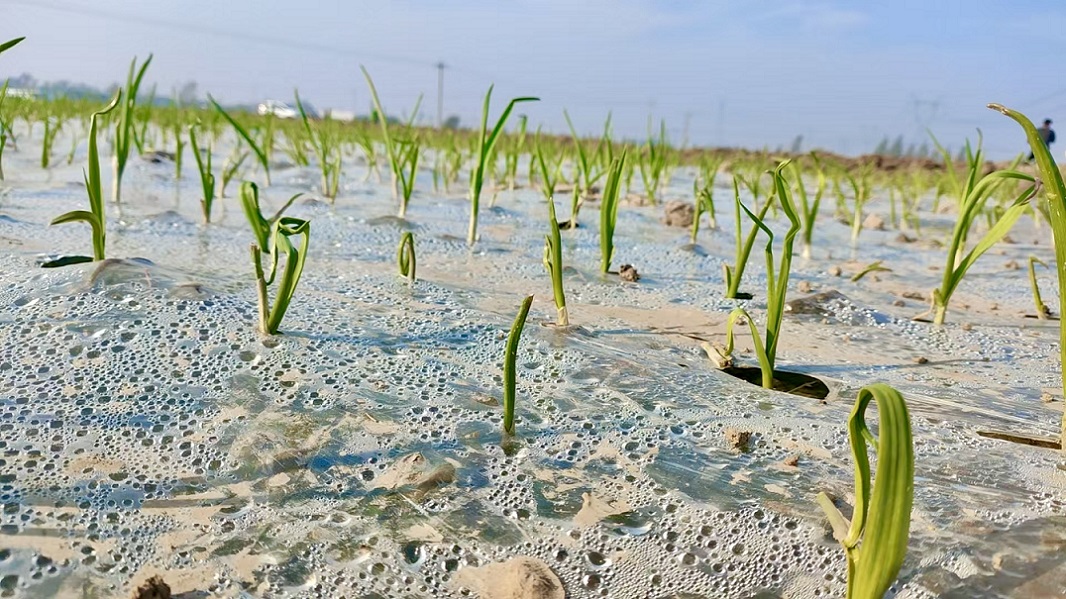
Prolonged autumn rain in Jinxiang, China’s main garlic region, has kept the soil wet and delayed planting, raising concerns over yield and quality.
Early-maturing garlic in Jinxiang is normally planted from late September through early October. However, by mid-October this year, only 20–30% of planting had been completed, roughly half the usual progress. Ground monitoring showed that many farms were still draining excess water and preparing the land, with overall planting clearly behind schedule.
Garlic planting in production areas is now largely complete. Local growers noted that while garlic typically endures winter conditions, delayed sowing can stunt root growth and deplete nutrient reserves, reducing cold resistance and yield. Industry sources added that wet soils and inadequately dried cloves heighten the risk of rot and pests issues. Fields with abbreviated growth cycles may not complete vernalisation, raising concerns about production shortfalls.
To mitigate adverse weather effects, producers generally treated garlic cloves with antifungal and cold-resistant nutrients before sowing and applied mulch films after planting to encourage seedling growth. Agricultural authorities advised closely monitoring seedlings and temperatures, with additional or thicker films used as needed for winter protection.
The market is closely watching the impact of late sowing and subsequent weather. Xu Quancheng, General Manager of Onedayone Northern China, noted that delayed planting and strong competition for seed cloves have caused price fluctuations, which may affect warehouse garlic costs. Uneven planting schedules have led to variable seedling growth, and winter temperature swings could influence next season’s production and supply.
For inquiries, please contact
Maggie Peng
Marketing Director
+86 18717865462
About Onedayone Group:
Onedayone Group is a global fruit and vegetable enterprise committed to supplying millions with safe and fresh produce. Operating in Yantai, Zhangzhou, Dubai, and the Netherlands, the company provides a diverse range of over forty fruit and vegetable varieties. It has established a comprehensive global cold supply chain that spans cultivation, processing, transportation, sales, and distribution, while also empowering farmers to enhance techniques and increase earnings within farming communities.